How to Choose the Best Material for Outdoor Furniture
Choosing the best material for outdoor furniture is a matter of research and education, and most people skip the research entirely. They go by looks in the showroom, bring something home, and discover three winters later that the powder coat is peeling or the leg joints have gone orange. Good news: the research takes about 20 minutes. There are eight materials that matter, and by the time you finish here, you'll know exactly which one fits your space, your climate, and your honest maintenance schedule.
We've been selling outdoor furniture since 2007, which gives us a front-row seat to what holds up and what doesn't. The methodology below draws on that experience, and it's part of the process we cover in our full patio furniture buyer's guide, though this piece goes deeper on material science and the climate factors that most guides skip entirely.
FAQs: Best Materials for Outdoor Furniture
Poly lumber (HDPE composite) requires the least maintenance of any outdoor furniture material: no staining, sealing, oiling, or seasonal storage required. It's made from high-density polyethylene, which means water can't penetrate it, it won't rot or splinter, and the color runs through the material rather than sitting on the surface. POLYWOOD backs this up with a 20-year residential warranty. Powder-coated aluminum is a close second: occasional soap-and-water cleaning, no rust risk, and no finish to reapply.
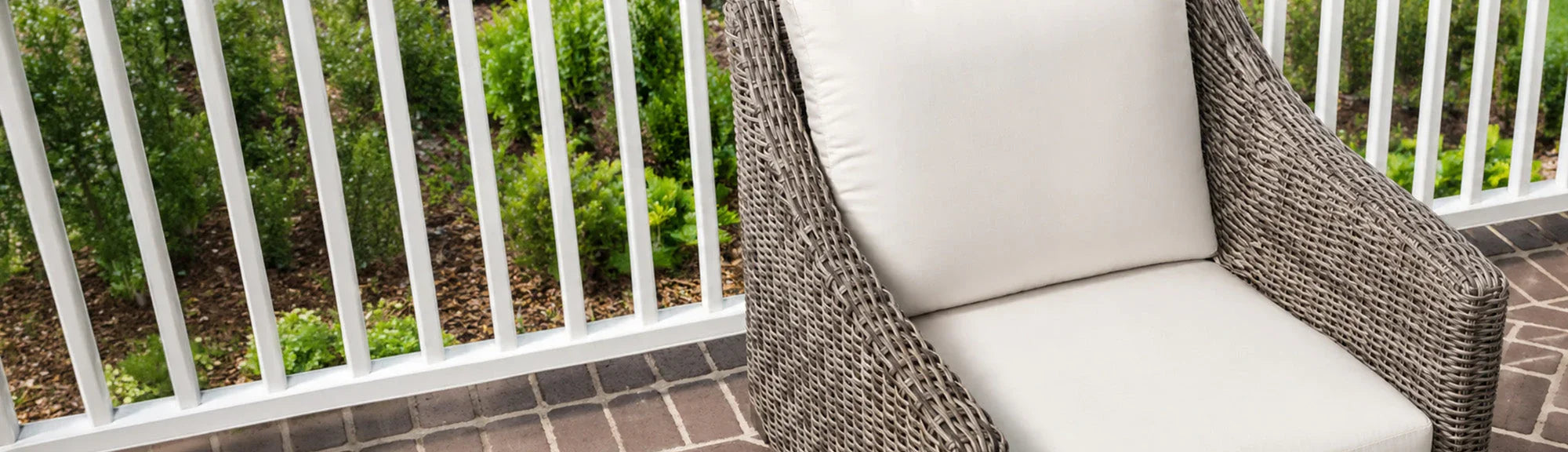
Synthetic resin wicker made from HDPE (high-density polyethylene) is durable, UV-resistant, and easy to clean. The problem is that most of the horror stories you've heard about wicker (unraveling, cracking, becoming brittle in the sun) are about PVC wicker, which is a completely different and lower-grade material. HDPE won't unravel or crack, holds its color under UV exposure, and is recyclable. When shopping, look for "HDPE wicker" or "all-weather wicker" on the spec sheet; if the material is just labeled "resin wicker" without specification, ask or assume it may be PVC. Most quality synthetic wicker furniture uses aluminum frames, so the frame quality tracks directly with how well the piece holds up over time.
Poly lumber is made from high-density polyethylene (HDPE) sourced from post-consumer recycled plastics: milk jugs, detergent bottles, shampoo containers. It is not the same as composite wood, which is a wood fiber and plastic blend. Poly lumber contains no wood fiber at all: it's 100% HDPE, which means it can't absorb moisture, rot, splinter, or be damaged by insects. The term "composite" is a loose industry catch-all that gets applied to both; the key distinction is whether there's any wood content. Genuine poly lumber (sold by POLYWOOD, Berlin Gardens, Seaside Casual, and others) is fully moisture-impermeable. It's one of the most durable outdoor materials available, with a look that's improved significantly over the past decade as manufacturing has refined the grain textures and color options.
Teak is the better choice for most buyers. It's lighter than IPE, easier to source from responsible suppliers, and more widely available in well-designed furniture lines. Teak produces natural oils that resist moisture and decay; left untreated it develops a silver-grey patina over time, which some people love and others don't. If you want to preserve the warm honey color, you'll need to oil it regularly. IPE is extraordinarily dense, ranking around 3,680 on the Janka hardness scale, making it nearly impervious to dents, insects, and rot. Its durability is outstanding, but it's significantly heavier than teak, more expensive, and the oil it requires to prevent checking is specialized and harder to apply because of the density. For most residential settings, teak is the practical choice. IPE makes sense for fixed, statement pieces where weight is irrelevant and you want something that outlasts everything else.
Yes, with one caveat: not all aluminum is created equal, and the specification matters more than the material label. Standard powder-coated aluminum performs well in most climates, including rain, UV, and moderate temperature swings. For coastal environments with salt air, look specifically for marine-grade or "coastal-grade" aluminum with a fully welded frame (no exposed hardware joints where rust can start) and a high-quality powder coat rated for salt exposure. Aluminum is lighter than wrought iron and steel, which means it can move in strong wind gusts; anchor heavier pieces or add ballast on exposed patios. The quality range in aluminum furniture is wide: a $400 set and a $2,000 set are both called "cast aluminum," but the wall thickness, alloy, and finish quality are very different. Buy from established brands with documented warranties.
Marine-grade aluminum and poly lumber (HDPE) are the two strongest choices for coastal environments. Salt air is corrosive to iron and standard steel almost immediately; even good powder coat on those materials will eventually fail faster near the ocean. Poly lumber is completely immune to salt air: there's nothing in it that can corrode. For aluminum, the key is fully welded frames (no exposed hardware) and a powder coat rated for coastal use; many brands offer this explicitly. Teak can work near the coast if you're committed to maintenance; the salt air accelerates the silver patina and increases the need for oiling. Wrought iron and standard steel near the ocean is a poor long-term investment regardless of how good the initial coating is.
Use the quick-reference answers above if you already know what you're looking for. For the full breakdown (including our scoring methodology, climate-specific guidance, and a "best for" decision matrix), read on.
How We Score These Materials
The table below scores eight outdoor furniture materials across eleven criteria. Each criterion is scored 1 to 5, for a maximum of 55 points per material. We've been using a version of this framework since the early days of the store, and we've refined it as we've watched materials perform (and fail) over time.
A few things worth knowing before you look at the totals. First, the criteria are weighted equally, which is a simplification. In practice, Low Maintenance and All Weather are probably worth more to most buyers than Wind Resistant or Comfortable (since most people use cushions). Second, Wind Resistant scores heavier materials higher (wrought iron doesn't blow away in a gust), so the scoring is accurate, but don't read a low wind-resistance score as a fatal flaw for aluminum. Anchoring a lightweight piece is a $20 fix.
Here's what each criterion actually measures:
- Easy to Rearrange — how portable the material is; lighter scores higher
- All Weather — overall performance across rain, UV, humidity, and temperature extremes
- Wind Resistant — how well it stays put without anchoring; heavier scores higher
- Fade Resistant — how well the color and finish hold up under UV exposure
- Water Resistant — surface water repellency and resistance to moisture damage
- Rust Proof — resistance to oxidation and corrosion
- Aesthetically Pleasing — design range, visual appeal, available styles
- Comfortable — bare-seat comfort without cushions
- Durable — structural longevity under average care
- Low Maintenance — time and money required to keep it in good condition
- Price — value score (5 = affordable/best long-term value; 1 = expensive/poor value)
PRO TIP: A high total score does NOT mean "best for you." It means best across an average of all these needs. Climate and use case are personal multipliers the table can't capture. Read the "Best For" section at the bottom before you decide.
The Materials, Scored
| Criteria | Resin Wicker |
Poly Lumber |
Alum- inum |
Rope / Weave |
Teak | Wrought Iron |
IPE | Steel |
|---|---|---|---|---|---|---|---|---|
| Easy to Rearrange | 5 | 4 | 4 | 4 | 4 | 1 | 3 | 1 |
| All Weather | 5 | 4 | 4 | 3 | 4 | 3 | 4 | 2 |
| Wind Resistant | 4 | 4 | 3 | 3 | 4 | 4 | 3 | 4 |
| Fade Resistant | 4 | 4 | 4 | 3 | 2 | 3 | 3 | 3 |
| Water Resistant | 5 | 4 | 4 | 4 | 2 | 3 | 2 | 2 |
| Rust Proof | 5 | 5 | 5 | 5 | 4 | 2 | 4 | 1 |
| Aesthetically Pleasing | 4 | 3 | 4 | 5 | 5 | 5 | 5 | 2 |
| Comfortable | 4 | 3 | 4 | 5 | 4 | 3 | 4 | 2 |
| Durable | 4 | 5 | 4 | 3 | 4 | 5 | 5 | 3 |
| Low Maintenance | 4 | 5 | 4 | 4 | 1 | 3 | 2 | 3 |
| Price | 3 | 4 | 3 | 3 | 2 | 3 | 1 | 2 |
| Total Score | 46 | 45 | 43 | 42 | 36 | 36 | 36 | 28 |
The Full Breakdown
Scores tell part of the story. Here's what the numbers can't capture.
Aluminum: Cast, Extruded, and the Difference That Actually Matters
Aluminum is the most versatile outdoor furniture material available, and it's the backbone of the industry for good reason. It doesn't rust, doesn't require seasonal storage, holds a powder coat finish without peeling or chipping, and comes in a remarkable range of styles from traditional cast scrollwork to clean modern extrusions. The 15-year structural warranties our aluminum brands offer are among the best in any furniture category.
The cast vs. extruded distinction matters more than most guides acknowledge. Cast aluminum is made by pouring molten metal into a mold: it produces thicker walls, ornate detailing, and the classic "wrought iron look" without the weight. Extruded aluminum is pulled through a die into specific cross-sections, giving you cleaner lines, lighter weight, and a more contemporary aesthetic. Both are durable; they just serve different design directions. If you're going transitional or traditional, cast. If you're going modern or Scandinavian-influenced, extruded.
Quality varies significantly across brands. Wall thickness, alloy grade, and powder coat application all affect how a piece holds up over a decade. Buy from manufacturers with documented histories: the longer a brand has been making aluminum furniture, the more refined their process. Our aluminum buying guide goes deep on what to check before you buy. When you're ready to shop, our aluminum patio furniture collection covers everything from dining sets to deep seating, in both cast and extruded profiles.
PRO TIP: For coastal use, ask specifically about the powder coat process and frame construction. Look for "fully welded" frames: hardware joints (nuts and bolts) are the first place rust develops, even on aluminum. A fully welded aluminum frame eliminates that vulnerability.
Synthetic Resin Wicker: HDPE vs. PVC, and Why It Changes Everything
Synthetic resin wicker is the most popular outdoor material in the residential market, and the reason comes down to a combination of comfort, style range, and low maintenance that nothing else quite matches. The caveat is that "resin wicker" describes two very different products: HDPE wicker and PVC wicker.
HDPE wicker holds its color, resists UV degradation, doesn't unravel or crack, and is recyclable at end of life. PVC wicker looks the same when new, but it becomes brittle in UV exposure, cracks, unravels, and fades within a few seasons. The quality furniture we carry uses HDPE wicker on aluminum frames; that aluminum frame quality is inseparable from how the piece performs overall. A cheap aluminum frame will flex and weaken before the wicker does.
The design range in resin wicker is remarkable: more styles, profiles, and configurations available here than in any other category. From Hampton-style deep seating to contemporary sectionals to bar sets. Our guide to the best outdoor wicker brands breaks down which manufacturers are worth the investment. Shop the full range in our outdoor wicker furniture collection.
Poly Lumber (HDPE Composite): The Material Getting Smarter Every Year
Poly lumber is made from 100% recycled high-density polyethylene: milk jugs, detergent bottles, shampoo containers. POLYWOOD processes roughly 400,000 of those containers per day at their Indiana and North Carolina facilities. By the time it's a chair on your patio, your laundry detergent jug has gone through a pretty dramatic career change.
The material's practical advantages are substantial. It can't absorb moisture, which means no rot, no swelling, no mildew. It won't splinter. The color runs through the entire board (not a surface coating), so it can't peel or chip. And it requires nothing beyond soap and water to maintain. POLYWOOD offers a 20-year residential warranty on their lumber, the longest in the category. Berlin Gardens and Seaside Casual offer comparable durability in this material category.
There are two honest drawbacks. First, poly lumber furniture gets warm in direct sun; the HDPE absorbs and holds heat in a way that lighter-colored aluminum doesn't. This matters on south-facing patios with full-day sun exposure. Second, the look has improved dramatically over the past decade, but on close inspection it still reads as synthetic to a trained eye. For buyers who want the warmth of wood without any of the maintenance, it's the best trade-off available. Our guide to poly lumber furniture covers the material in detail, and you can browse the full range in our poly lumber outdoor furniture collection.
Teak: The Most Complicated Relationship in Outdoor Furniture
Teak has been called "the king of woods" by so many people in this industry that the phrase has become a little threadbare. But the reputation is earned. Teak produces natural silica and oils within its own cellular structure that create a built-in barrier against moisture, decay, and insect damage. That's not a feature added during manufacturing. It's in the wood. A well-maintained teak piece can last 50 years outdoors. That's a legitimate claim, not marketing copy.
The complication is the patina. Untreated teak oxidizes to a silver-grey color within one to two seasons. Many people love this look; others buy teak expecting the warm honey color to stay indefinitely and are surprised when it doesn't. If you want to maintain the original color, you'll need to apply teak oil or sealer every season (or every other season at minimum). It's not an enormous time commitment, but it is a real one.
I have a Harmonia teak club chair set that's been sitting in my Denver backyard for ten years. Colorado sun is punishing: 300 days of it per year at altitude, which amplifies the UV intensity. I have never once oiled it, treated it, or done anything beyond occasionally rinsing it off. It silvered years ago, which took some getting used to honestly. But it is still as structurally solid as the day we got it, and I still sit in it regularly. For a material story, that's not nothing.
For responsible sourcing, look for FSC-certified teak, which confirms the wood comes from sustainably managed forests rather than old-growth sources. Our full teak buyers guide covers grain grades, sourcing, and care in detail. Browse our teak outdoor furniture collection for current inventory.
PRO TIP: The more intricate the design, the more surface area you're committing to maintaining. A simple teak bench takes five minutes to oil. A six-piece dining set with detailed arm profiles takes considerably longer. Factor that into your decision.
IPE Wood: For People Who Mean It
IPE (pronounced "ee-pay") is a Brazilian tropical hardwood sometimes called ironwood or Brazilian walnut, and the ironwood nickname is not casual. Its Janka hardness rating sits around 3,680, roughly three times harder than teak and significantly harder than most domestic hardwoods. It is practically impervious to dents, rot, insects, and weathering. Decking boards made from IPE can last 40 to 75 years outdoors with proper care.
The trade-offs are real. IPE is dense and heavy: expect a large dining table to run 80 to 120 lbs. Moving it is a two-person job. The density that makes it so durable also means it requires a specialized penetrating oil (not standard teak oil) to prevent surface checking (small surface cracks from moisture cycling). That oil is harder to find and harder to work with than standard teak care products. IPE furniture is also expensive, reflecting both the material quality and the demand for a slow-growing tropical hardwood.
The right application for IPE is a fixed, prominent piece where you want something that will outlast your ownership of the house: a built-in bench, a statement dining table on a covered terrace, a poolside chaise on a property that won't be rearranged. Browse our IPE wood furniture collection for available options.
Wrought Iron: Old School, With One Catch
The word "wrought" means "worked by hand," and historically that's exactly what it was: iron hammered and worked into shape while hot, creating the ornate scrollwork designs you still see on patio sets today. True historical wrought iron actually contains a slag content that made it less brittle than cast iron. Most furniture sold as "wrought iron" today is mild steel that's been decoratively formed to look hand-worked; the original process is essentially extinct as an industrial practice, which is either a loss for craftsmanship or a relief for anyone who's ever tried to carry one of these chairs across a patio.
Where wrought iron furniture genuinely excels is on a covered patio where it won't be moved often, in a dry climate, where you want an heirloom aesthetic that nothing else replicates. The ornate designs are distinctive, and the weight (typically 20 to 40 lbs per chair) means wind isn't a concern.
The one catch is the coating. Wrought iron will rust the moment moisture finds bare metal. A chip in the powder coat, a scratched weld joint, hardware that wasn't sealed properly: any of these is an invitation for oxidation that spreads. In damp climates or anywhere near salt air, wrought iron requires regular inspection and touch-up of any damaged finish. You can browse the full range in our wrought iron patio furniture collection.
Powder-Coated Steel: Strong, Heavy, and Rarely the Right Choice
Steel is the strongest material on this list. It's also the most rarely justified for residential outdoor furniture. For most applications, aluminum delivers comparable structural performance at a fraction of the weight and with better rust resistance. Unless you're outfitting a commercial installation where weight is an asset and durability across heavy public use is the primary spec, steel outdoor furniture is a solution to a problem most patios don't have.
If you do buy steel outdoor furniture, the most important factor is what's under the powder coat. Look for galvanized steel, which adds a zinc barrier between the steel and any moisture that gets through the coating. Without galvanization, a single chip in the finish becomes a rust initiation point that spreads under the coating and is very difficult to stop. Steel outdoor furniture in coastal environments or high-humidity climates accelerates this problem considerably.
Steel makes more sense for commercial settings: restaurant patios, hotel pool decks, public spaces where the added mass keeps furniture in place and the high-traffic wear patterns benefit from the greater structural margin. For residential use, aluminum almost always wins the cost-performance calculation.
Rope and Woven Synthetic: The Comfort Wild Card
Rope furniture (also called cord, synthetic rope, or woven synthetic) is not a structural frame material in the way aluminum or teak is. It's a surface treatment applied over aluminum frames, and the distinction matters for how you evaluate it. You're not really buying a rope chair; you're buying an aluminum chair wrapped in rope. The frame is what lasts; the rope is what you sit in.
That said, rope furniture earns its high comfort and aesthetics scores. The woven surface conforms slightly, dries fast after rain, requires no cushions for comfortable seating, and has a contemporary coastal aesthetic that's become very popular in both residential and hospitality settings. There's a texture and warmth to it that you don't get from bare aluminum.
The honest durability caveat: quality rope weaves will hold up for years, but they degrade before the frame does. UV exposure and repeated flexing break down synthetic cord over time, and cheaper weaves can stretch or develop weak points in high-use areas. Buy from brands with track records and, if possible, with a warranty that covers the weave, not just the frame. Our rope outdoor furniture collection covers several well-regarded options in this category.
What the Scores Don't Tell You: Climate
The scoring table is geography-blind, and that's its main limitation. A set that scores 47 in San Diego can be a maintenance nightmare in coastal Maine. Climate-specific selection is where most material guides fall short, so we've broken it out here.
Coastal and Salt Air Environments
Salt air is corrosive. It accelerates oxidation in iron and standard steel, compromises powder coat adhesion over time, and can pit aluminum that isn't properly specified for coastal use. The materials that belong near the ocean are poly lumber (immune to corrosion entirely, with nothing in it to corrode), marine-grade aluminum (fully welded frames, powder coat formulated for salt exposure), and HDPE resin wicker on aluminum frames.
Wrought iron and steel near the ocean are poor long-term investments regardless of initial coating quality. Teak can work at the coast if you're committed to maintenance, but the salt air accelerates the silver patina and increases the frequency of oiling needed to keep the wood from checking. IPE is similarly fine structurally but needs more frequent oil applications than it would inland.
The specific ask for coastal aluminum: fully welded frames. Hardware joints (the nuts, bolts, and fasteners that hold non-welded frames together) are typically made from multiple metal types and are the first corrosion point, even on pieces advertised with "stainless steel hardware."
Intense Sun and High UV
High UV environments accelerate fade on any material with a surface-applied color. Poly lumber is the exception: the color is integral to the material, so UV degrades the surface texture slightly over many years but doesn't cause color loss. HDPE wicker (not PVC) also holds color well under UV.
Metal furniture gets hot in direct sun, which matters for comfort more than durability. Lighter powder coat colors absorb less heat; a white or sand-colored aluminum chair in direct sun is noticeably more comfortable than a dark charcoal one. Teak in high UV will silver faster than in moderate climates and will need more frequent oiling if you want to maintain the warm color.
My Denver set is a useful data point here. Colorado gets intense, high-altitude UV (more than most coastal locations) and the teak silvered faster than it would have in a lower-UV environment. It held structurally, but the aesthetic change was accelerated. Factor that into any teak purchase in mountain or desert climates.
Cold Climates and Freeze-Thaw Cycles
Poly lumber is explicitly designed for this. The HDPE material expands and contracts with temperature cycles without cracking or warping; POLYWOOD and Berlin Gardens both document that their furniture can be left outdoors year-round in any climate, including northern winters with repeated freeze-thaw cycles. No other material makes that claim as cleanly.
Aluminum handles cold well with no special precautions. Teak and IPE are structurally fine through freezing temperatures, though moisture in any open checking or cracking can expand in a hard freeze and worsen existing damage; teak care is more important before winter than after. Wrought iron and steel should be inspected for any coating damage before winter; exposed metal plus water plus freeze-thaw is a corrosion accelerant.
High Humidity
Humidity is primarily a problem for natural wood. Both teak and IPE need more frequent maintenance in persistently humid climates because the wood is cycling between wet and dry states more actively. Mold and mildew are more likely on untreated teak surfaces in humid conditions. Aluminum, poly lumber, and resin wicker are unaffected by ambient humidity. For any material, cushion storage in humid climates matters: even Sunbrella fabric, which is highly mold-resistant, will develop surface mildew if stored damp in a closed container.
The "Best For" Quick Reference
As with any real question, the answer to "which material is best" is a form of "it depends." But here's how we'd actually direct someone walking into the showroom. You can also browse our collection organized by material to see what's available in each category.
| If your priority is... | Best material | Why |
|---|---|---|
| Zero maintenance, set it and forget it | Poly lumber (HDPE) | No oiling, no sealing, no storage. 20-year warranty. |
| Coastal or salt air location | Marine-grade aluminum or poly lumber | Corrosion-immune; poly lumber needs zero care, aluminum needs fully welded frame. |
| Maximum style range and design options | Aluminum or resin wicker | More configurations, profiles, and collection options than any other category. |
| Natural wood look without wood's demands | Poly lumber | Grain texture, warm colors, wood-like appearance: no maintenance required. |
| Genuine warmth and character of real wood | Teak | Nothing replicates real teak grain. Commit to seasonal oiling if you want to keep the color. |
| Best long-term value and durability | Aluminum | 15-year structural warranty, zero maintenance, wide design range. Strong cost-per-year numbers. |
| Commercial or hospitality use | Aluminum or poly lumber | Both handle heavy-use environments with documented commercial warranties. |
| Best bare-seat comfort without cushions | Rope/woven synthetic | The woven surface is naturally comfortable and dries fast. Contemporary aesthetic as a bonus. |
Materials That Don't Hold Up Outside
A few materials appear in outdoor furniture retail that we'd steer you away from:
Cheap plastic resin furniture (the stackable white chairs and basic patio sets you find at big-box stores) is inexpensive for a reason. The polypropylene used in mass-market plastic furniture becomes brittle under UV exposure, fades badly, and provides almost no structural resilience. Fine for temporary use. Poor investment for anything you expect to last more than a couple of seasons.
PVC wicker mimics HDPE wicker at first glance, and the price difference is the biggest tell. PVC becomes brittle in UV exposure, unravels, cracks, and isn't recyclable the way HDPE is. If the material spec doesn't explicitly say HDPE or all-weather HDPE wicker, assume it may be PVC.
Natural rattan is an indoor material. It gets used outdoors in old photographs because people would bring their rattan furniture outside for the afternoon and bring it back in. Left outdoors in any climate (especially humid ones), natural rattan degrades quickly.
Bare metals of any kind (untreated steel, uncoated aluminum, raw cast iron) will rust on contact with moisture. This seems obvious, but it's worth stating: any metal outdoor furniture should have a protective coating (powder coat, anodizing, galvanizing) and that coating is the thing you're maintaining when you inspect the piece annually.
A Word on Fabric and Cushions
Outdoor cushion fabric is a material decision too, and it compounds whatever you chose for the frame. We always recommend Sunbrella fabrics when the option is available. The reason is specific: Sunbrella uses a solution-dyed acrylic process where the color is applied at the fiber stage, before the fabric is woven, rather than printed onto the surface of a finished fabric. This means UV exposure fades the surface and the interior of the fiber at the same rate: there's no "bleached out top, dark interior" that you see in cheaper printed fabrics after a season.
Sunbrella's marine origins are also worth understanding. The brand started making canvas for boat applications and expanded to furniture. The durability requirements for marine canvas (constant sun, salt water, mildew exposure) are significantly more demanding than residential patio use, and those standards carry over. It can be cleaned with a diluted bleach solution without color damage, which is useful for mildew spots.
When shopping for cushions, look for fabric with zippered covers (so you can remove and wash the cover separately from the foam) and foam that's either rated for outdoor use or has drainage holes. Indoor foam soaks and stays wet; outdoor-rated foam or quick-dry foam dries from the inside out.
What We Actually Recommend
After 17 years of selling this, here's the honest answer.
For most residential buyers, particularly anyone who doesn't want to think much about maintenance, the combination of powder-coated aluminum furniture with Sunbrella cushions delivers the best long-term value in the market. You get a 15-year structural warranty, essentially zero maintenance (wipe it down occasionally, that's it), and a design range across brands like OW Lee, Castelle, Jensen Outdoor, and Ebel that covers everything from traditional cast to contemporary extruded. The cost-per-year numbers are very strong when you factor out the maintenance costs that other materials carry.
For buyers who prioritize absolute zero maintenance and appreciate sustainability, poly lumber is the right call. POLYWOOD's 20-year warranty is the longest in the business, the material is genuinely made from recycled content, and it can stay outside in any climate without any action required. It's not cheap upfront, but it's the most cost-effective choice measured over 20 years. Berlin Gardens offers similar quality with a slightly different aesthetic range.
For buyers who want real wood and accept the relationship that comes with it: teak, full stop. IPE is more durable structurally, but teak is more available, lighter, better designed across the furniture market, and more forgiving in maintenance. My 10-year-old Denver set is proof that even neglected teak holds up well. If you commit to oiling it, it stays beautiful. If you don't, it turns silver and stays solid. Either way, you have furniture.
My personal preference for a covered patio anywhere in the country is cast aluminum with Sunbrella cushions in a neutral tone, something I can rearrange when I want to, leave out through winter, and basically ignore. The design variety in cast aluminum is remarkable. No matter your personal style or budget, there's a cast aluminum set that fits it. If you want help narrowing it down, reach out to our team. We've been helping people through exactly this decision since 2007.
Reader Comments
Woodard Cleaning & Restoration July 31, 2014
This is a great guide, thank you for sharing! Choosing the best outdoor patio furniture for your space can be a challenge, but this makes it much easier. We will be sharing this with our followers!
Patio Productions August 4, 2014
Sometimes visuals just make it easier to realize which material checks all the boxes!
Yogesh Bharadwaj October 29, 2016
Tks for the details , it's really helpful with pictures
Susan Wiest November 12, 2016
Thanks for the info and pics! We live on the gulf and are trying to decide on a durable and low maintenance material for the salt air. We are currently looking at C.R Plastics. Do you have any advise or information on C.R. Plastics or on choosing outdoor material for the salt air?
Thank you!
Patio Productions November 16, 2016
If you're looking for something durable and low maintenance, recycled plastics are a smart choice, whether it's C.R. Plastics or Polywood. Both offer excellent warranties, with CR Plastics typically having a 10 year residential warranty and Polywood going a bit further with a 20 year residential warranty. Some recycled plastic products are so durable, they offer limited lifetime warranties.
Pay close attention to the hardware material, the nuts and bolts that hold everything together. You want to make sure the hardware is made from a rust resistant material such as stainless steel. Especially considering your proximity to the ocean.
Another benefit to consider is that furniture made from recycled plastics has weight and won't be blown around easily from strong winds, which is good next to the ocean.
Danni Black December 21, 2016
I had no idea that teak furniture could last up to 50 years! That is definitely something that we will have to look into while we are looking for outdoor furniture. We are really excited to pull our patio together so hopefully these tips can help us find the right fit. Thanks for sharing!
Patio Productions December 24, 2016
You're very welcome!
Congratulations! Putting a patio together is always a fun process. After all, you're creating a space to enjoy and relax in.
There are definitely both positives and negatives to any material so don't hesitate to do as much research as you can.
We are here to help if you have any questions. Our staff has years of experience in this industry and we are always happy to help in any way we can.
Cindy Tesler December 28, 2016
I liked how you said that you should consider the aesthetics and durability for your patio furniture. You also said that the types of materials will also be determined by where and how the furniture is being used. I think it's important to choose patio furniture that has cushions that can be washed to keep it clean.
Patio Productions December 29, 2016
We completely agree. This is the reason we recommend Sunbrella fabrics when that option is available. Sunbrella is an extremely durable and can even be washed with bleach without losing color. When shopping, check to see that the cushions have zippers for removing the foam core. This makes washing a breeze!
Jen wong February 15, 2017
thank you for all your infor. I have a patio that is facing west and over the years I cannot find a good shade for the outdoor furniture. I saw your rec on the 12'x12' pavilion cover Treasure Gardens looks like a good solution but they no longer sell that. I am wondering where would you rec me to find something like that? and It will be set on just concrete on my patio. Thank you so much!
Bernard Clyde April 14, 2017
I appreciate the information and chart you've shared showing the pros and cons of each type of material for outside furniture. I think a lot of this applies just as well to street furniture as far as durability. It's important for businesses to understand how adding some street furniture out front can attract and retain visitors to your property. Understanding the benefits of each material can help you get the most long-lasting results out of that.
Fa April 15, 2017
I wonder about heat...It gets intensely hot in Las Vegas and would think k that any kind of metal chair (especially armrests) could accidentally burn dibrine. Any rating in regards to heat/extreme sun?
Patio Productions April 19, 2017
If you're set on getting metal furniture for your outdoor space, the lighter the color the better. Lighter colors reflect more heat than darker colors.
Otherwise we would also recommend considering synthetic resin furniture. Plastic wicker furniture made from HDPE is UV resistant and can withstand high temperatures as well as cracking and peeling. It's also much more comfortable to the touch when exposed to direct sunlight.
Chris Winters May 3, 2017
I like the fact that synthetic resin could be so lightweight and easy to clean. My wife and I have been planning on making a comfortable outdoor area. I definitely think that we should focus on getting some comfortable low maintenance outdoor furniture.
Max Jones June 2, 2017
My wife and I have been dreaming about our perfect patios for a while, and I think we're finally going to get it done this year. I'm going to be looking for patio furniture once we get it done though, and I like the cast aluminium furniture! I'm going to have to talk to my wife about what she wants to decorate the patio with, and see what some options could be for us!
Marcus Coons June 16, 2017
I completely agree with you in that it is important to make sure you consider the type of weather you have before buying outdoor furniture. It is understandable that considering this can help you find a material that will last the cold of winter and the heat of summer. As I see it, taking the time to research this can help you save time when looking for the best stores where you can get the type of items you need to add beauty and comfort to your property.
Afton Jackson July 28, 2017
I didn't realize how important it is to evaluate the weather conditions of your area and aesthetics when choosing a material for outdoor furniture. My sister just bought a home that has a nice patio in the backyard. Hopefully, these tips can help her choose a furniture set that will allow her to entertain guests in comfort.
Patio Productions July 30, 2017
Absolutely. There are certain materials that hold up better in specific climates and others that don't. So it's good to be aware of what works best in your area.
Incorporating the look and feel of your natural surroundings into the design of your outdoor space is a great way of creating a seamless outdoor space that feels like a natural extension of your environment.
Sandra Hexner August 14, 2017
Thank you for all this great information about choosing the right outdoor patio furniture! I really like your point about wrought iron being handmade and it's going to provide a unique design while being able to hold up to the natural elements. My husband and I want to get our new patio up to par, so we can start having parties, so your article has been very helpful.
Reed Cooper December 25, 2017
Great article!
Persephone de Vito January 18, 2018
It was nice how you weighed the pros and cons of the different types of materials that can be considered for the outdoor furniture. What appealed to me the most, however, was the cast aluminum iron. Like you said, it's the best option for outdoor furniture because it offers more than just seating support. Maybe I should mention that to my parents because they were the ones who want to decorate the garden and a stool was one of the things that they're considering. Thank you for the ideas. I'll be sure to mention this to them.
maira saddad January 25, 2018
Great tips! You are providing the best info to buy furniture online. I found these tips very helpful for me because I am planning to buy furniture online. Thanks for sharing.
Celestia Stratheimer March 8, 2018
It was great that I came across this article because I learned all about the teak and how it's the best wood for outdoor furniture because of its weather resistance ability and hardwood surface that makes it strong. My mom did say that she wants to use wood for the outdoor furniture. It might be a good idea to suggest this to her so as to have a basis when she redecorates the garden next season. Thank you!
Patio Productions March 10, 2018
Thank you for your comment. Teak is a wonderful wood for outdoors and it is as durable as it is beautiful. However, teak does require regular up-keep so it's important to keep that in mind. And the more intricate the design of the furniture, the longer it takes to do things like sand it down or apply a sealer.
Kathy March 31, 2018
Thanks for this informative article. My cousin simply bought a home that encompasses a nice terrace within the grounds. Hopefully, the following tips will facilitate his select a piece of furniture set that may enable her to entertain guests in comfort.
Elen April 15, 2018
Really appreciate this information. We are considering the Gensun Amari Cushion line. Have not been able to find it in a store. Do you happen to know what is the seat base made of. I'm talking about the seat under the cushion. Thanks.
Patio Productions April 19, 2018
Thank you for your comment. Unfortunately, we have had Gensun products in our showroom before but not any from that particular collection. It's hard to tell from the images they provide on their website, but they should have images of the frame alone (without a cushion) somewhere in their database. We no longer have a relationship with Gensun, otherwise I would be glad to reach out to them on your behalf. Here is their customer service e-mail: customerservice@gensuncasual.com
I'm sure they would be able to provide you with the information you need.
Thank you. Have a wonderful day.
Bethany Birchridge May 7, 2018
I love the resin wicker furniture is durable. I've been wanting to get some outdoor furniture, so it's great to learn all about the different materials. I'll share this with my family so we can choose the best material for our home.
Dino Violante June 21, 2018
It was really nice when you said that because the word "wrought" means "made by hand," they are perfect if the person is after durable furniture pieces that have unique designs. I will mention this to my mom so that she has an option for when she replaces the old pieces that we are using in the garden. I am confident that this will get her attention since she mentioned wanting to make her place look personalized and unique. Thank you for this!
Victoria Fiorani June 25, 2018
We want to put our sunroom furniture outside on our screened porch. It is rattan. Does rattan hold up in humidity? We live in North Carolina and the humidity gets oppressive here in the summer. Would we be better off selling it instead?
Thank you.
Victoria
Patio Productions June 27, 2018
Rattan is not meant to be used outdoors for the long term under any condition. Rattan, just like most natural materials, is going to degrade much faster outdoors vs indoors. This might confuse some people because rattan furniture is seen being used outdoors in old photographs. The thing is, people liked using their rattan furniture outdoors, but it wouldn't be kept outdoors. People would take the furniture out just for the day and then bring it back inside. It would never be kept outdoors.
Amethyst Boheur July 5, 2018
It was really informative when you said that low quality plastic resin is low on durability and that it is best to choose a high-density Polyethelyne when deciding to go for a plastic furniture. I guess it really is quite durable since it lasted a while, though the outdoor furniture that we're using now is a bit scratched. It's otherwise okay though. That is the reason why I think it will be a good idea to just have it repaired. Thanks.
Amethyst Boheur September 21, 2018
It sure got me when you said that cast aluminum is a good metal to use outdoors as long as the place is not windy because it's durable and lightweight. If so, then I might consider this for the pavilion that we will have built. This is because we plan to make it movable so that we can take it to any part of the garden, and if want to be able to move it, it has to be lightweight.
Patio Productions September 23, 2018
Aluminum is the metal of choice if you're looking for something that is lightweight and can withstand exposure to the outdoors. Good luck on your outdoor pavilion! That's an exciting project!
Tim Yaotome November 6, 2018
Wow! I never knew why teak is a popular choice for outdoor furniture, and now that I know that it secretes oils in order to keep it sturdy and beautiful, it reminded me of something. My wife wants to plan our house's summer renovation early and I will be glad to let her read this article for her. In the meantime, I will help her by finding chair stores that would not only assure us of a great looking house but one that can last years as well.
Patio Productions November 9, 2018
Hello Tim. Thank you for your comment. Good luck on your search and we hope you find just what you're looking for to create a beautiful and comfortable outdoor space.
vinyl fence styles February 12, 2019
This is really a nice post because anyone can learn How to Choose the Best Material for Outdoor Furniture . I really gained knowledge about vinyl fence styles is best for house yard and its give protection around the house.
Rattan Man March 26, 2019
Great Post,,, You explained the things really well. You can also check our furniture collection. And keep sharing such insightful posts.
Kerri April 10, 2019
I have a balcony on the ocean and we get high winds and salt spray. Our old set is rusted out after a year. What do you suggest?
Patio Productions August 3, 2019
A good feature to look for are fully welded aluminum frames with powder coat finish. Aluminum is already a rust resistant metal and the additional layer of powder coating makes it practically rust-proof. The reason a fully welded frame is so important is because hardware is always the first thing to rust and then that can spread to the rest of the frame. The nuts and bolts that hold a piece of furniture together are typically made of a combination of metal types even when they say "stainless steel hardware."
Insaraf April 11, 2019
A Dining table an essential part of furniture item of every home as people stay with food in home and it as a tool of comfort. Your article given an amazing idea to customers to select the best for themselves. so this is a great post for me and others to get the best item.
Rattan Man April 17, 2019
Thank you for sharing this information. This can help me in designing my home in the best way.
Al Poulos April 18, 2019
Hi. Thanks so much for your article! Is there a difference in quality between different cast aluminum sets. We recently saw a set by Hanamint and the sales person told us their quality best on market. Is Alfresco comparable- because we can get similar set for half price of Hanamint.
Patio Productions July 27, 2019
Thank you for your comment. That is a very good question. There is definitely a difference in quality when it comes to cast aluminum. The longer the history of the company, the better the quality tends to be. Cast aluminum furniture requires experience and the longer a company has been making it the better.
Tinam May 6, 2019
This is great information. Can you provide insights about what options can endure rain and cold? In other words, what can remain outdoors during mild winters (covered)
Patio Productions July 27, 2019
Thank you for your comment. That is a great question. From personal experience Polywood is one of the best outdoor materials when it comes to withstanding all types of extreme weather conditions. From cold to hot climates, polywood does very well in any setting. They don't even need to be covered during the off-season, their furniture pieces can handle exposure all year round.
Stephanie July 13, 2019
As others have commented, this post is very helpful! And I really appreciate that you have been replying to our questions all these years later. I hope that you are up for one yet more ?. I have a wooded lot with a number of furry friends scurrying about looking for things to destroy. They've already gnawed the handle on the city garbage bin. I am concerned about what they would do to my future patio set. That alone has me leaning me towards wood (more specifically teak after reading this) or metal. I was concerned that the metal would get too hot under my Georgia sun. Is that warranted? Would the HDPE (?) wicker stop a squirrel's tooth? Would you recommend something else altogether? Budget-wise, I intend to find an established line with classic lines that I can collect as coupons & clearance sales allow.
Thanks in advance!
Patio Productions July 14, 2019
Thank you for your comment. Those are all very good questions.
HDPE is essentially a plastic resin wicker, therefore I don't see why critters would be interested in gnawing on plastic materials, unless they were looking to live inside the furniture or something of that sort.
I looked into the reason why squirrels chew on wood and they do it to wear down their teeth, which grow constantly. I don't think a soft plastic would be a tempting material for them, but I'm not an expert on animal behavior.
Metal furniture does get warm in the sun, but if it is cushioned your skin would never make contact with the aluminum frame. One benefit of aluminum frames is that they tend to have open sides and backs that allow air flow. This is a good feature to have in hot climates. Therefore a wicker frame may be cooler to the touch than an aluminum frame, but they don't allow air flow because the back and sides are closed.
Michelle Catapang November 14, 2019
Thank you for the tips! These are all noted!
Patio Productions November 16, 2019
Thank you for your comment. Glad to hear you found this post useful.
Chahyay January 17, 2020
I like the interaction of the people and complete guidelines and proper answers are very valuable Admin I really appreciate your hard work and thanks a lot for sharing your knowledge and great tips.